

 By rssfeeds-admin

Winnie the Pooh is a curiously enduring character. He’s not flashy. He’s funny, but not funny on purpose. He gets into silly situations and always finds absurd ways out of them. Christopher Robin’s yellow stuffed bear is celebrating his 100th anniversary this year, and LEGO has released a set worthy of the occasion.
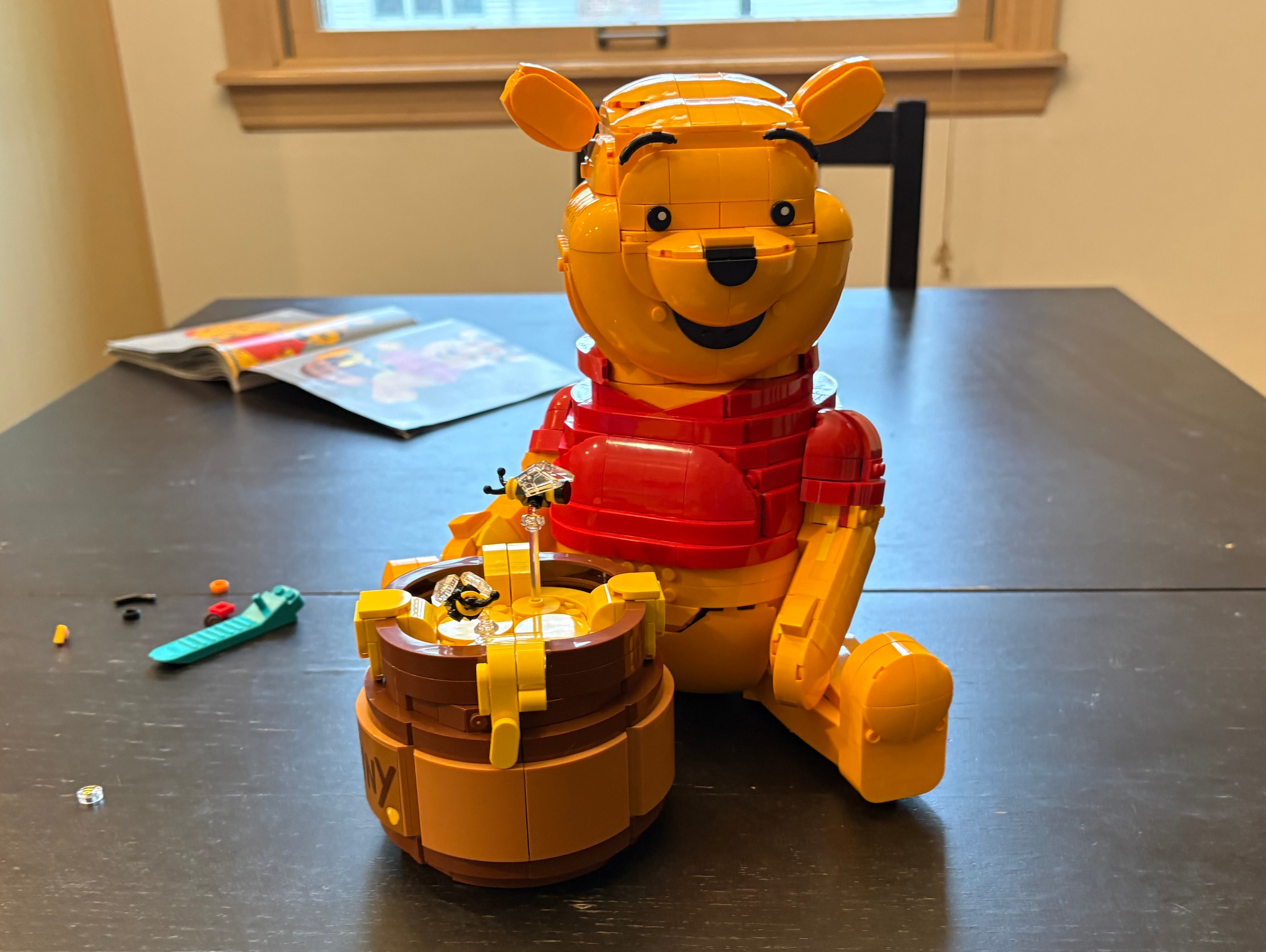
LEGO Disney Winnie the Pooh presents the lovable teddy-bear-come-to-life in his natural state: sitting before a giant jar of hunny — er, honey. But first you have to build him.
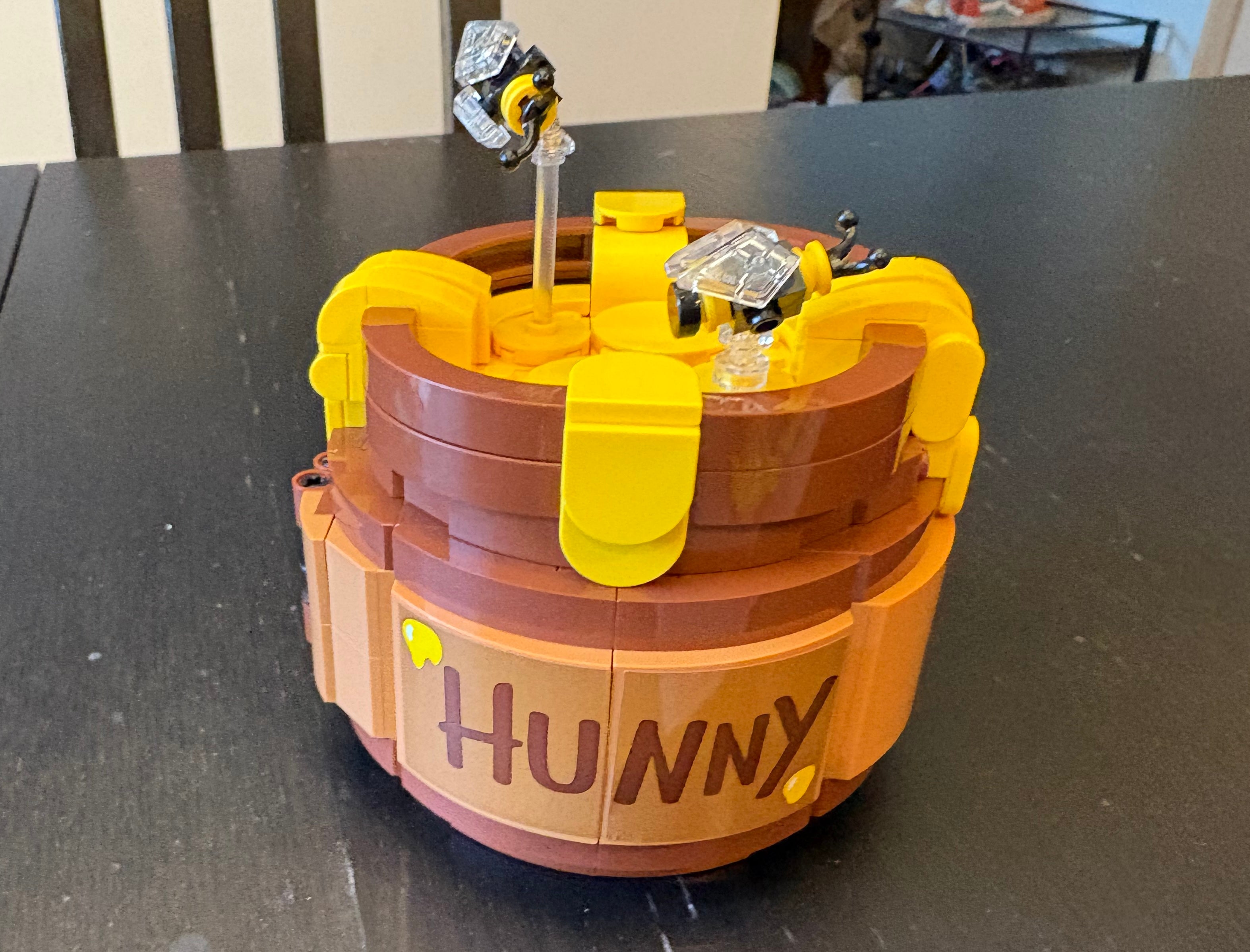
You start by assembling the honey pot, which is made up of two similar halves connected by a hinge. The top of the pot features a layered cluster of curved yellow pieces that do a terrific job of looking like gooey, dripping honey. You also build tiny bees that sit atop clear posts so they appear to buzz over the liquid gold.
My only complaint about this part of the build is that several details, including the “Hunny” label on the side of the pot, are stickers you have to place on the pieces yourself. I can never square the stickers exactly right, so they always look a little crooked in the finished set. This is not a new complaint among LEGO builders, but I would always prefer printed LEGO pieces over stickers.
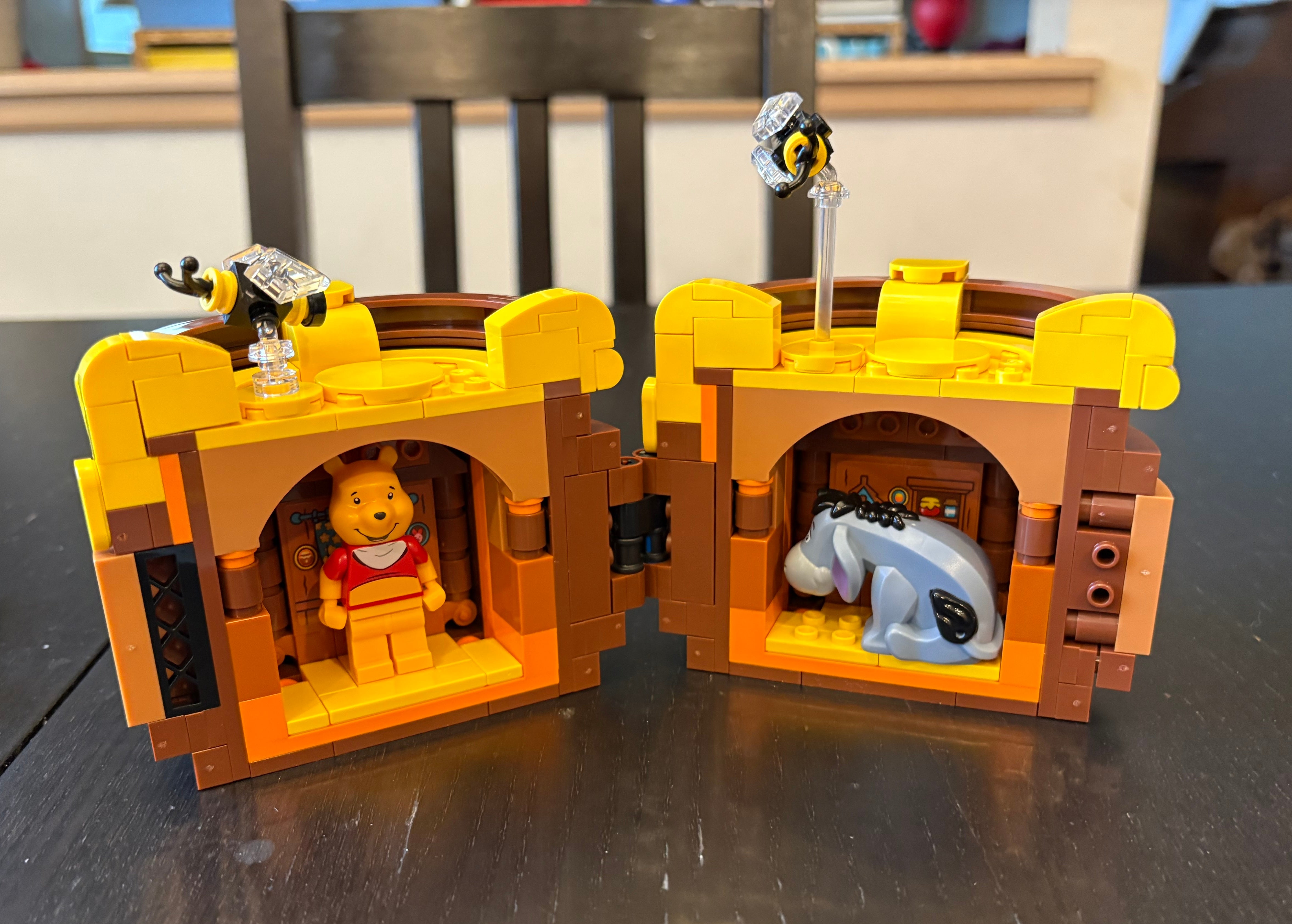
This isn’t just a standard honey pot, however. The pot’s hinge connector lets you crack it open like a book, revealing a tiny version of Pooh’s house within. While his den resides in a tree in the source material, it works just as well as a secret room inside the honey pot here. One side has a window, while the other has shelves and the blue Pooh-koo clock. Space is tight, but there’s enough room to place the included Pooh minifigure and Eeyore figure in there.
After that’s done, it’s time to build Winnie the Pooh himself. As he is a self-described “stout, round” bear, so is his LEGO version. Any LEGO set that’s round on the outside needs a sturdy interior to affix all those rounded pieces to, and Pooh is no different. You start by building his torso, which is basically a sphere: red on top for his T-shirt, and yellow on bottom thanks to his famous disregard for pants (he’s a teddy bear, what do you expect?).
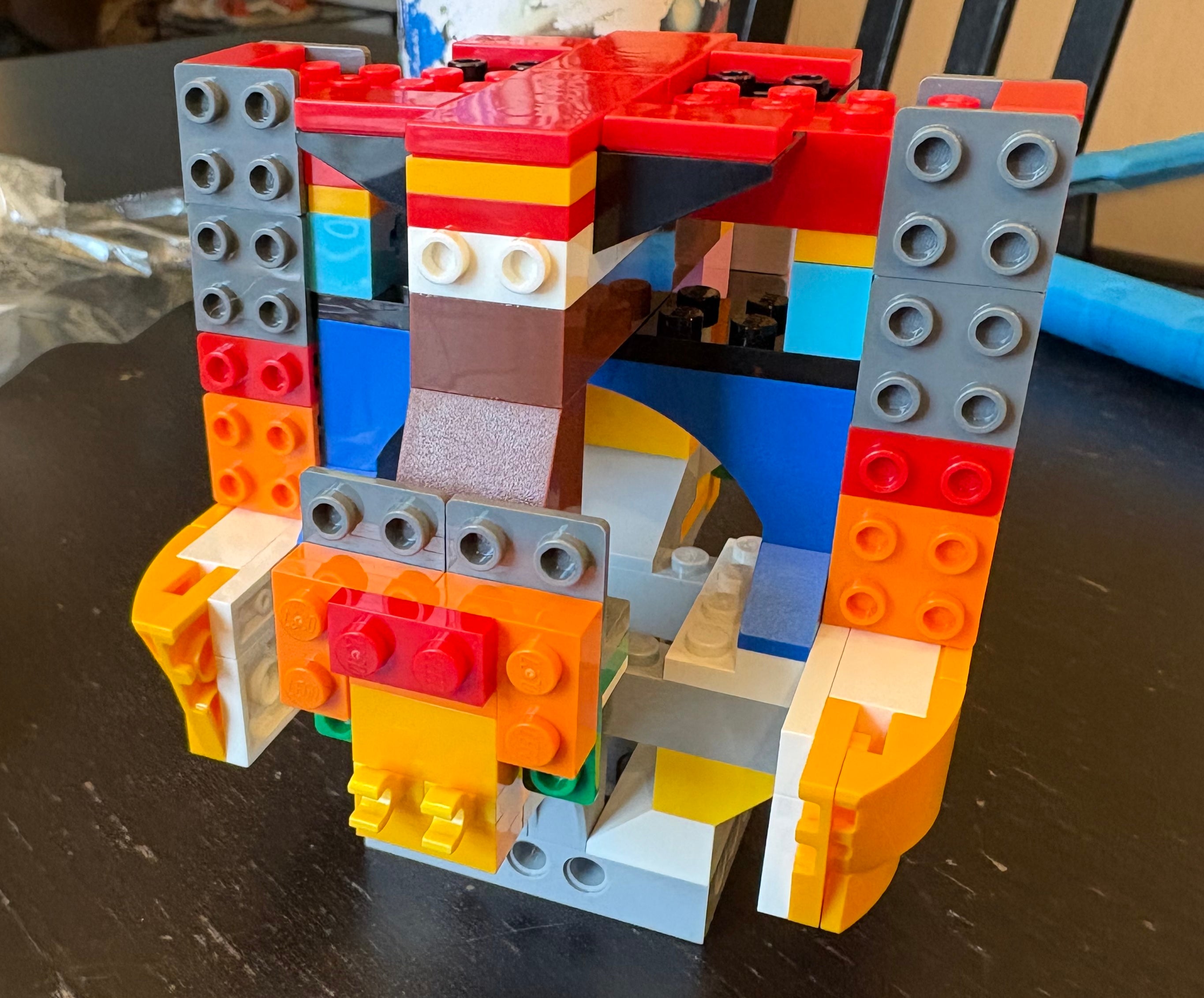
To build that torso, you first need to build the core, which is comprised of a complex structure of bricks of all sorts. Thankfully, they come in a variety of colors that help you keep them straight during the building process – colors that are hidden inside of the finished product. There’s a lot going on inside Pooh’s torso, and for a while it’s hard to see how it’s all going to come together. But come together it does, and you wind up with a vaguely orb-like construction to which you’ll eventually attach his limbs and head.
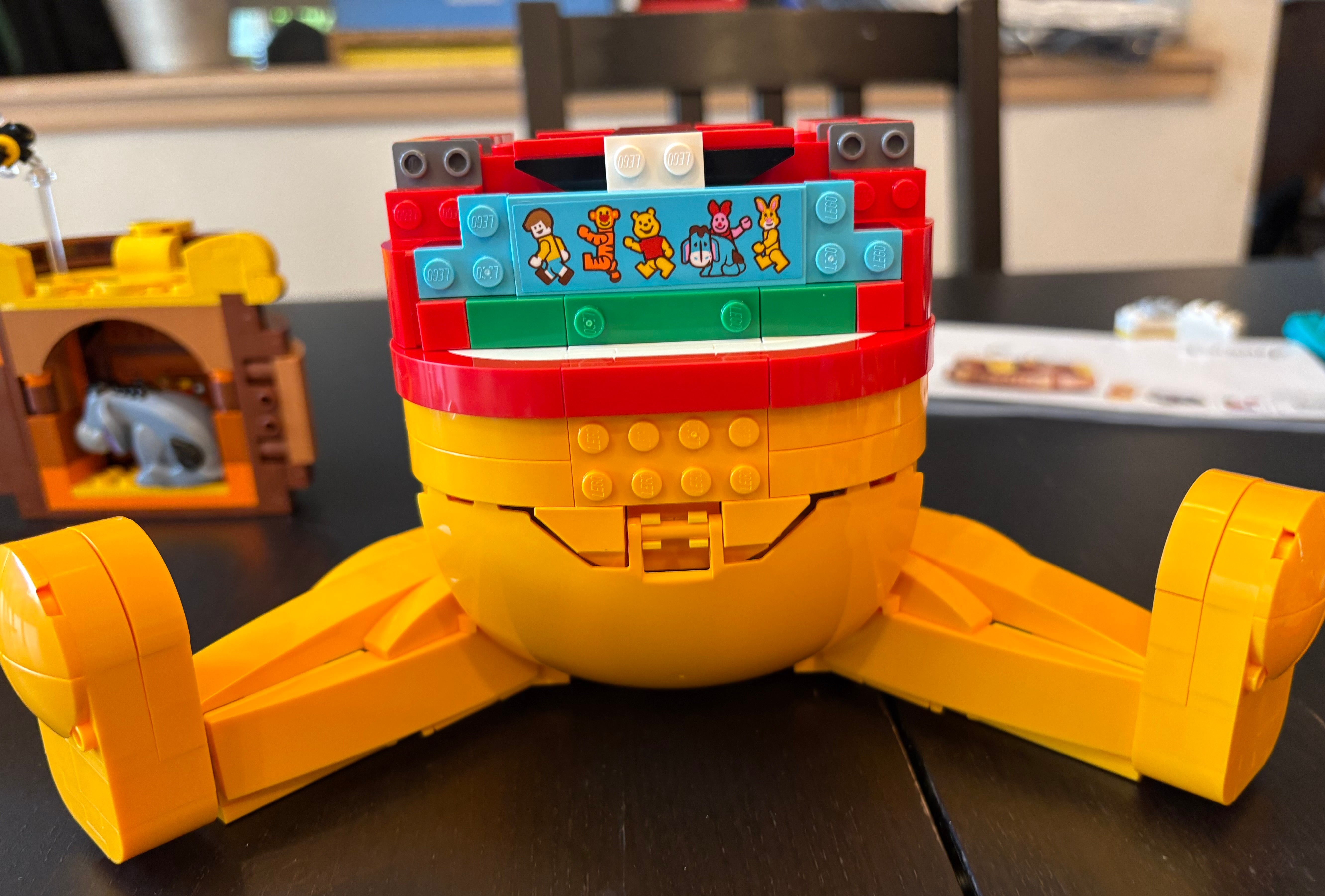
Next you build out Pooh’s legs, which are spread out akimbo, the better to place the honey pot between them. Then you finish his torso, placing a long sticker (again! grr!) depicting the whole Hundred Acre Woods gang on a blue piece that goes right where Pooh’s heart would be inside his chest. This gets covered up later, making it a fun little Easter egg for builders. Finally, you build and attach his arms, which means all that’s left is Pooh’s head.
Pooh’s head is its own little construction that, like his torso, doesn’t look like much in the early going. Eventually you get a Pooh-shaped head, complete with a little placard inside that says (yes, on a sticker), “Think, think, think.” Then you put some honey jars in there to signify he has honey on the brain, add some ears, close up his head, and you’re done.
The finished LEGO Winnie the Pooh set is a beautifully designed model of a childhood favorite character. Despite being made out of plastic bricks, it ends up looking mostly like rounded edged and gentle curves. It looks terrific, and serves as a loving display piece for any fans of Winnie’s going back a hundred years and counting.
LEGO Winnie the Pooh is now available for $149.99 at Amazon and the LEGO Store. For more, check out our picks for the best Disney LEGO sets.
Chris Reed is a commerce editor and deals expert for IGN. He also runs IGN’s board game and LEGO coverage. You can follow him on Bluesky.
Discover more from RSS Feeds Cloud
Subscribe to get the latest posts sent to your email.