

 By rssfeeds-admin
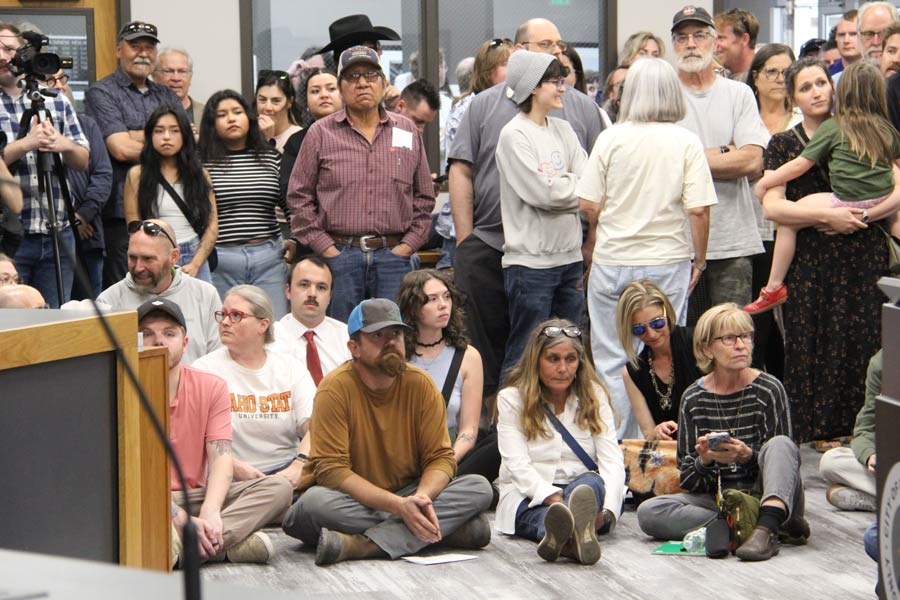
POCATELLO – Hundreds of people gathered Thursday evening at City Hall to speak their mind on the possibility of an artificial intelligence data center being built in the Gate City.
Lex Developments has proposed building an AI data center at 1800 River Park Way in Pocatello, which is the site of the former Hoku Materials plant.
During the public hearing on Thursday, an overwhelming majority of east Idahoans spoke out against granting a conditional use permit to the company.
RELATED | Is an AI data center coming to Pocatello? Weigh in on Thursday
Hearing Examiner Kathleen Lewis opened the meeting shortly after 5:30 p.m., and it went on for nearly four and a half hours, ending just before 10 p.m. Before the night was over, more than 90 people shared public testimony.
Over 60 people spoke in opposition to the application, while only three spoke in favor. And while the sign-in sheet showed about 20 people who wanted to speak were “uncommitted” to either side of the debate, many of them expressed views that would seem to indicate they were against the project.
Lex Developments’ proposal
The meeting began with a presentation by the applicant, Gus Shultz, of Lex Developments, which lasted no more than 2 minutes before he asked the examiner if she had any questions for him.
“From my understanding, we’re here for a CUP — conditional use permit — to allow us to (build) a data center, at whatever scale we can,” Shultz said.
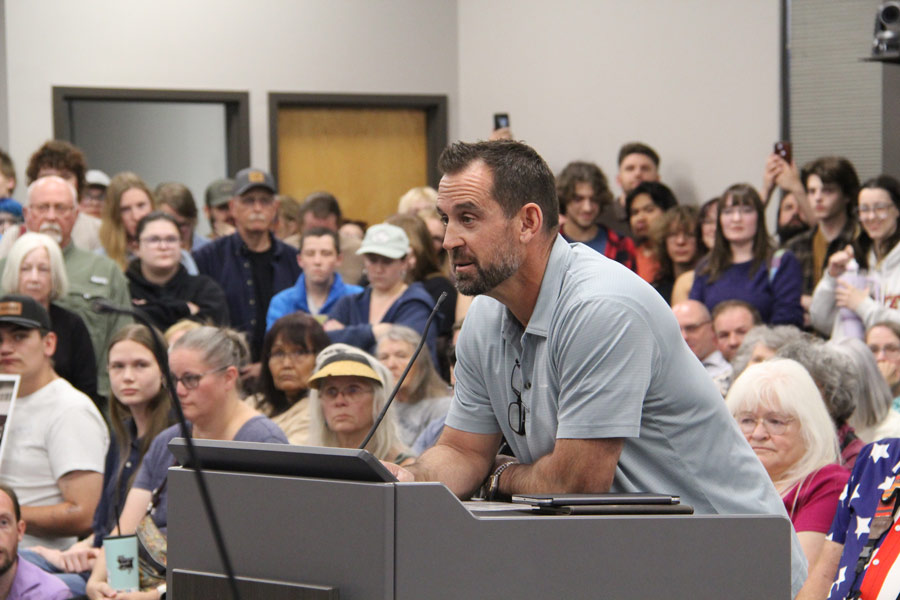
While Shultz addressed this, it’s unclear how much electrical capacity would be required to power a potential data center. During questioning, Shultz said the old Hoku site had a capacity of 125 megawatts when it was operational, which he believes was the capacity they were approved for.
The hearing examiner’s agenda for that night also included an attached document, containing an application and a slideshow presentation. In the application, Idaho Power says that the facility would need a capacity of up to 100 MW to function; but in the presentation, the potential data center is identified as having 200 MW. Click here to read the application.
Later, Shultz clarified that Lex Developments is awaiting the results of a study from Idaho Power, which will determine the scale and design of the facility.
The public weighs in
Alasdair Macleod, who introduced himself as a resident of the area, was among the first to speak when the meeting was opened up for public comment. He said he supports the application because he’s worked in data centers for around 20 to 25 years.
Macleod said he sees the data centers generally as “reasonable neighbors compared to other heavy industrial type facilities,” but he’s also seen a common problem in their construction: “weak local planning and weaker local government, that then data center companies will take advantage of.”
“I’ve seen local authorities that will be blinded by the large dollar value of the investment … and give large tax breaks on sales tax, on property tax, that then denies a recurring revenue stream for the town,” Macleod warned.
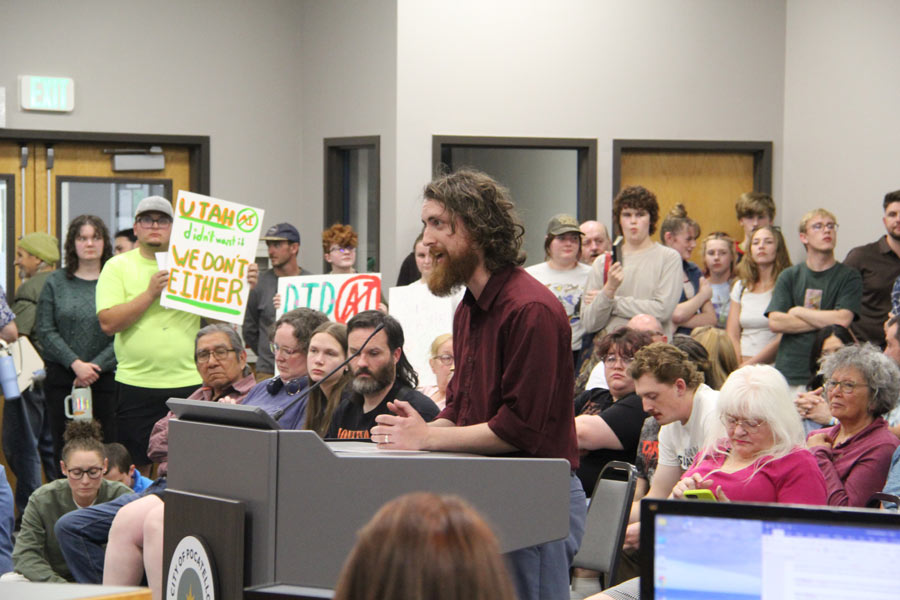
Maximo Orr, who introduced himself as a public school teacher from Pocatello, said he doesn’t think it makes sense to grant the application, given the strong public opposition to the project.
“It doesn’t make much sense to me to go against the clear majority, to trust people who have proven they are not trustworthy, to gamble when it is us at stake,” Orr said. “And I hope that the leaders of this city feel the same way — that it does not make sense to go against the will of the people, to cater to people who do not have our best interests in mind.”
At some points in the meeting, emotions ran high.
In between testimony, Lewis said, “I am still looking for uncommitted statements. So far, we haven’t gotten there.”
Hanna Romes, who signed up to give an “uncommitted” statement, started out by saying, “I’m unsure if this is the noise we want to hear,” while beginning to play audio of the ambient noise made by an AI data center.
Lewis asked Romes, “Are you speaking uncommitted?” To which Romes replied that she was “unsure.”
This interaction eventually culminated in another audience member shouting at Lewis, prompting Lewis to ask a law enforcement officer to escort the woman out. It was unclear whether the audience member left on her own or was removed from the building.
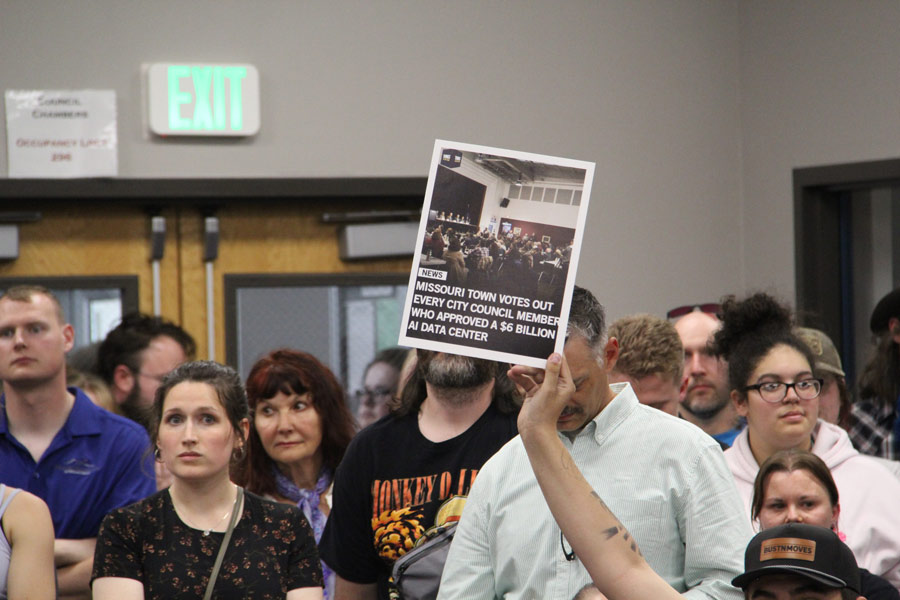
Of the four who spoke in favor of the application, only one person expressed support without reservations.
“My hope is that a project like this could act as a catalyst to give our young people, including my son or daughter, a reason to stay and build the future, right here in Pocatello,” said John Edwards, who “strongly” supported the project.
Lindy Brian, who said she has lived in Pocatello all her life, called out Edwards’ speech specifically and said, “As a youth, I’m here to tell you what I have been doing for the past 19 years.” She then listed going on hikes, having bonfires and dipping her toes in the Portneuf River.
“There are three things that we find most important in Idaho. That is transparency, community and our environment,” she said. “As I listened to Mr. Schultz speak, I took notes on what he was saying. And … I have question marks after every single point that he made. He was not clear on anything to do with power, with sewer, with water — only a promise that it will eventually pan out.”
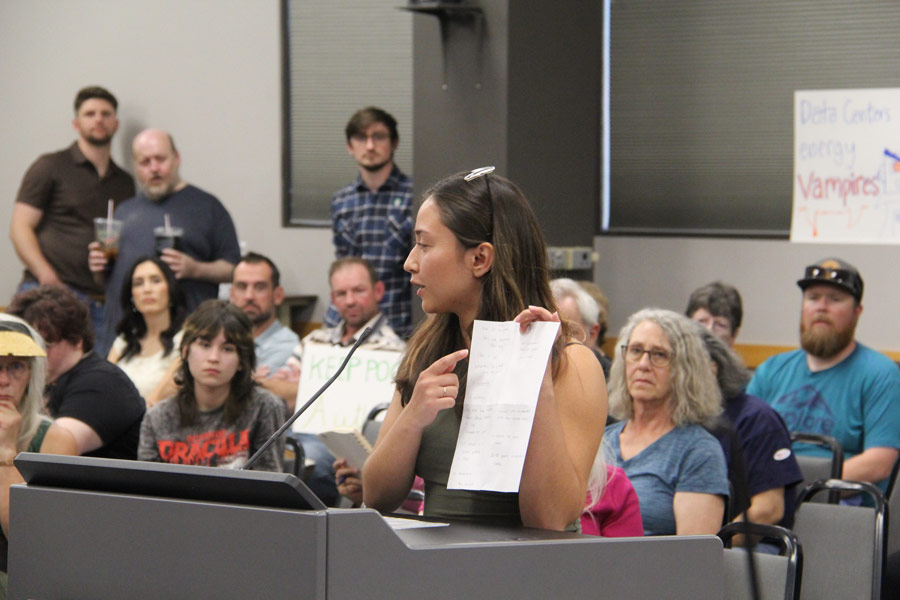
A number of speakers also criticized Shultz’s application and presentation for being vague and failing to provide more clarity on what a potential AI data center would look like.
Theodore Pollock, a reactor supervisor at Idaho State University, was the last member of the public to speak. While he marked himself as neutral, he was one who criticized the application.
“I’ve written more on a napkin than this. I mean, it’s not a serious application,” Pollock said.
He said he first looked at the application thinking like an engineer, and thought, “What about the cooling? What about this, and what about that? The details.”
Then, he said, he realized it wasn’t about that.
“What this really is, is it’s probing a small community and looking for weakness. That’s why it’s vague. It’s looking for a small community that perhaps would go along with something that other, more well-funded communities would say, ‘We’re not going to do that, that’s a no,’” Pollock said.
The question of power
Matthew Stucki, representing Idaho Power, spoke at the end of the meeting. Idaho Power is neutral on the application, and Stucki said his company would have a legal obligation to serve Lex Developments as a customer if approved. The cost of improvements wouldn’t be borne by regular customers, he clarified.
“The applicant would be completely responsible for all costs incurred in the system for upgrades to substation transmission generation, all of that. They would be responsible for those upgrades, and they would not impact the rate payers,” Stucki said.
When asked for an interview after the meeting concluded, Shultz requested that one be set up with EastIdahoNews.com at a later date.
Shultz was also given time to offer a short rebuttal.
“I’m grateful to hear what I’ve heard. I’ll take into consideration a lot of the stuff that I’ve heard, and there’s some things, they’re valid points, he said. “… As we go through the process of permitting, we will have more details as we design this, and at the end of the day, the city gets to tell us what we can and can’t do.”
No matter what decision Lewis makes, it can be appealed, which would then bring it forward to the City Council. This process would also include a public hearing and end with the City Council voting on whether to uphold the examiner’s decision.
The City Council’s decision can also be appealed to the Idaho District Court.
The post Hundreds show up for public hearing on proposed AI data center appeared first on East Idaho News.
Discover more from RSS Feeds Cloud
Subscribe to get the latest posts sent to your email.