

 By rssfeeds-admin
RIRIE — While trolling for kokanee salmon on Ririe Reservoir Tuesday, my friend and I were about ready to quit for the day when we trolled near a flock of western grebes. Instead of flying, the birds all dove.
About a minute later, I had a tremendous hit that almost pulled my rod out of its holder. As I grabbed the rod, one of the grebes surfaced, shaking its head. Apparently, it had mistakenly hit my dodger thinking it was a fish.
I was glad that I didn’t have to land that big bird.
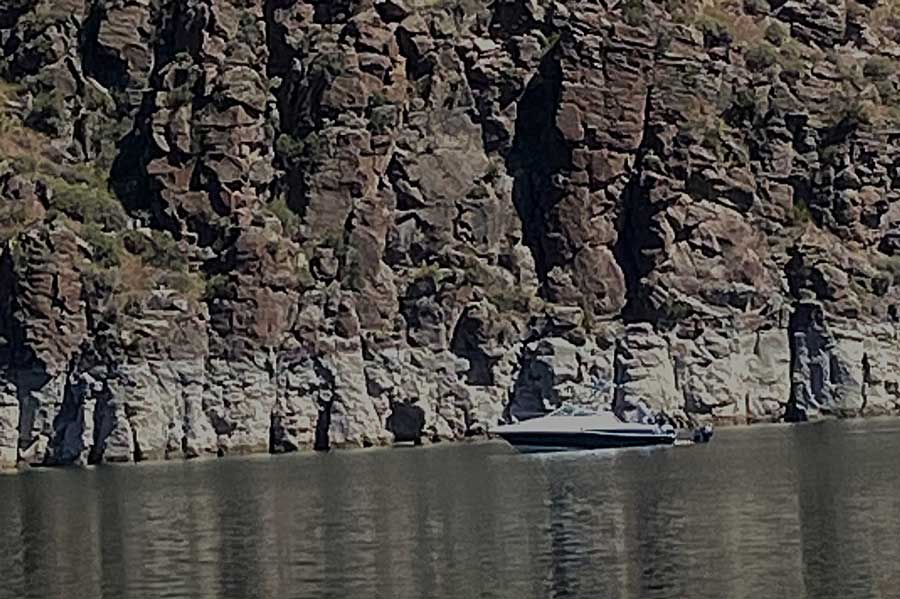
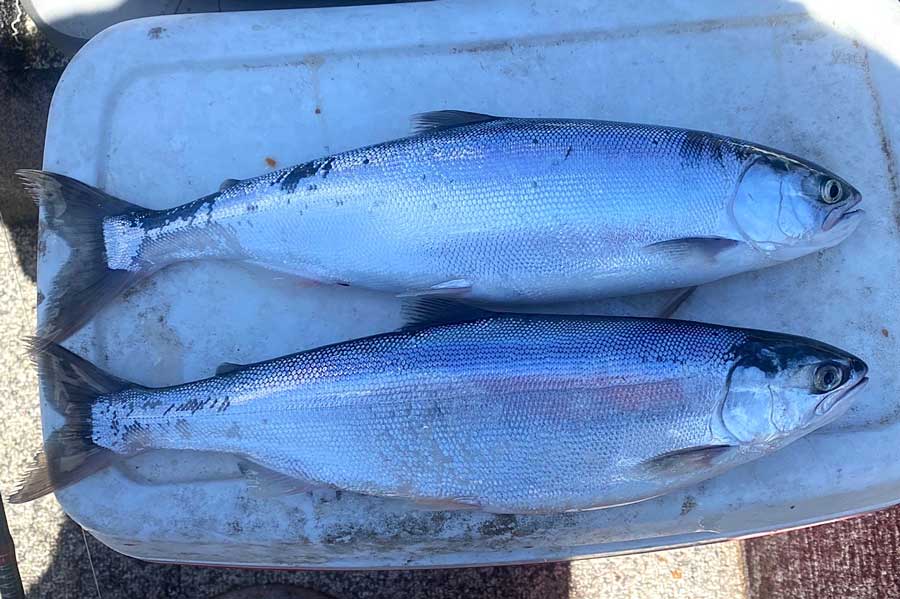
Fishing for kokanee on Ririe continues to improve as the water warms on the reservoir, but sometimes the loose schools of salmon are hard to find.
Case in point: The very next day, I was invited by another friend to fish Ririe. We got there early to fish where I had been successful on Tuesday, but we could not find any kokanee there. We did catch three trout and a couple of little kokanee, but none of the large ones that I had successfully caught the day before in the same area.
We finally found the larger kokes down in the main body of the reservoir, about a half-mile above the Juniper Boat Ramp near a flock of western grebes. On Wednesday, the salmon were scattered from the dam up to the beginning of the canyon.
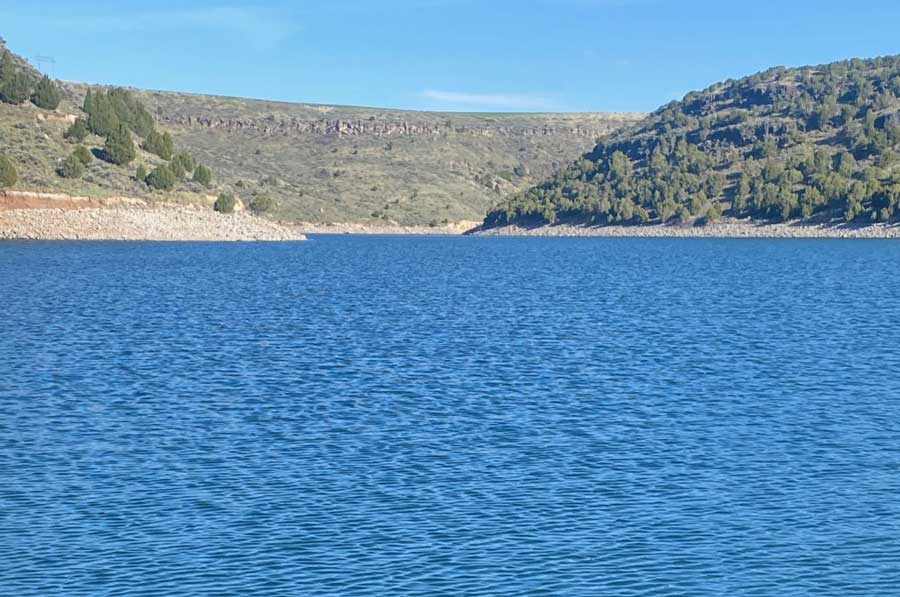
Fishing has been inconsistent this spring, probably because water temperatures have been variable, with most east Idaho waterways still failing to reach the 55-degree Fahrenheit threshold preferred by kokanee. The recent cold snap dropped the temperature from 53 degrees back down to 51 degrees, and the kokanee remain scattered or in loose schools.
I have found that in the early morning, we catch most of the 2-year-olds and the 13-to-15-inchers near the surface, less than 20 feet down. As the morning progresses, the salmon drop deeper. They’re about 20 to 30 feet below the surface by 9 a.m., and by noon they are as deep as 60 feet.
Downriggers or a sliding weight system is needed to get down to the fish once they are below 40 feet. My favorite setup is a sliding sinker rig followed by a dodger trailing a Kokabow Kokabug with two hooks and garlic-scented corn.
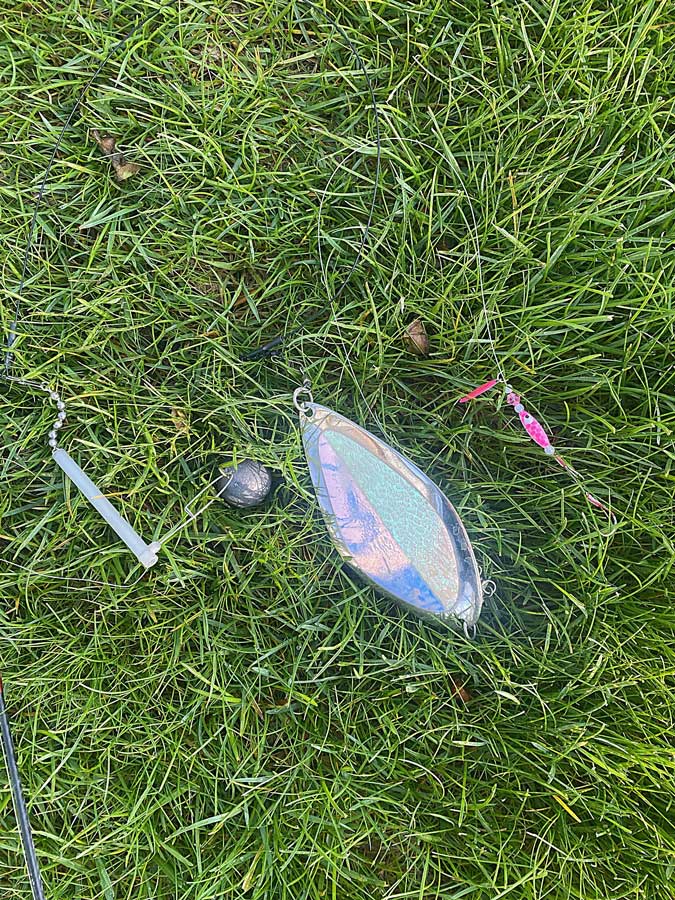
I usually start with a 2-ounce weight, fished about 60 feet behind the boat. As the fish move deeper, I switch to a 3-ounce weight with the same rig, fished at 80 feet behind the boat, then to a 4-ounce weight fished 100 feet out. We try to go about 1.2 to 1.4 miles per hour. When the boat is equipped with a downrigger system, I like to use one downrigger and one free-sliding weight system.
This past week, the Idaho Department of Fish and Game stocked 2,200 catchable, 10-to-12-inch rainbow trout and tiger trout in Ririe. They also stocked 16,500 catchable rainbows in Island Park Reservoir — 1,000 of them in both Ryder Park Riverside Pond and Becker Pond.
As of Saturday, Henrys Lake will go from a “catch and release” fishery to a two-per-day limit. Reports from Henrys indicate that the fishing the last few weeks has been very good. Hopefully, we will have enough water for both Ririe and Henrys for the fishing to remain good all summer.
Have a very safe and happy Memorial Day weekend. Be kind and courteous to all you meet.
MORE ADVENTURES ‘LIVING THE WILD LIFE’:
Discover more from RSS Feeds Cloud
Subscribe to get the latest posts sent to your email.