

 By rssfeeds-admin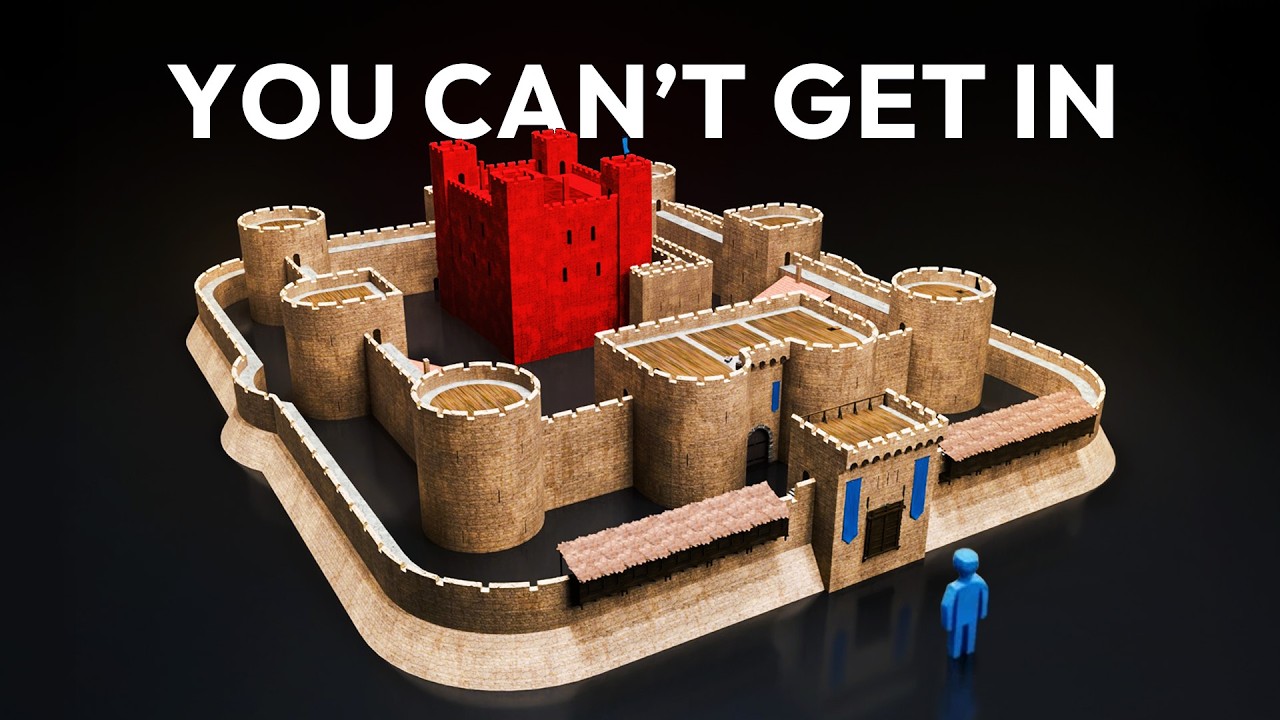

Very few of us have ever set foot near a genuine medieval castle, especially if we don’t happen to live in Europe. Yet practically all of us still, here in the twenty-first century, refer with some frequency to their components in our everyday speech. When we invoke moats, drawbridges, dungeons, and even catapults, we almost always do so metaphorically — assuming we’re not active members of a historical re-creation society — yet we also have no problem seeing them before our mind’s eye with what feels like perfect clarity. The difficulty comes if we attempt to integrate all of those images, absorbed haphazardly from folk tales and popular culture, into a functioning whole.
The fact of the matter is that people in the Middle Ages really did live and work in castles, and occasionally had to defend them, or indeed attack them. Using a 3D-rendered replica constructed to reflect how those structures were built in the fragmented Europe of the eleventh through fourteenth centuries after the fall of the Carolingian Empire, the Deconstructed video above explains everything about how they worked in the span of about twenty minutes.
This tour begins with the barbican: not the celebrated Brutalist complex in London, but the exterior fortified passage “designed to expose attackers to defensive fire before they even reach the main gate.” And it only gets harder for would-be castle captors from there.
Parapets with cutouts through which archers could fire their arrows, the moat that made undermining (a term common enough in modern language that few now recognize its origins) next to impossible, the drawbridge that could be pulled up, the walls slanted to repel battering rams, the spiked portcullises that could be slammed down: these are just a few of the myriad defenses that made invaders’ lives difficult — and, in many cases, short, especially when “murder holes” were involved. (Now there’s a term just waiting for inclusion in our lexicon.) The example constructed here represents the zenith of castle design, the culmination of an evolutionary process that began in the tenth century with a structure called the motte and bailey: a term that, if you don’t already know it from other contexts, you probably just don’t do enough verbal battle on the internet.
Related Content:
How To Build a 13th-Century Castle, Using Only Authentic Medieval Tools & Techniques
Behold a 21st-Century Medieval Castle Being Built with Only Tools & Materials from the Middle Ages
The Technology That Brought Down Medieval Castles and Changed the Middle Ages
How Medieval Cathedrals Were Built Without Science, or Even Mathematics
Based in Seoul, Colin Marshall writes and broadcasts on cities, language, and culture. He’s the author of the newsletter Books on Cities as well as the books 한국 요약 금지 (No Summarizing Korea) and Korean Newtro. Follow him on the social network formerly known as Twitter at @colinmarshall.
Discover more from RSS Feeds Cloud
Subscribe to get the latest posts sent to your email.