Legacy Newspapers Are Pricing Themselves Out of the Conversation With Paywalls
WEST PALM BEACH, FL – For more than a decade, paywalls have been positioned as the financial lifeline of legacy journalism; a necessary barrier designed to preserve revenue as print advertising collapsed. But as online conversation increasingly migrates to open, community-driven platforms, that same strategy is now quietly undermining the very visibility and relevance news organizations depend on to survive.
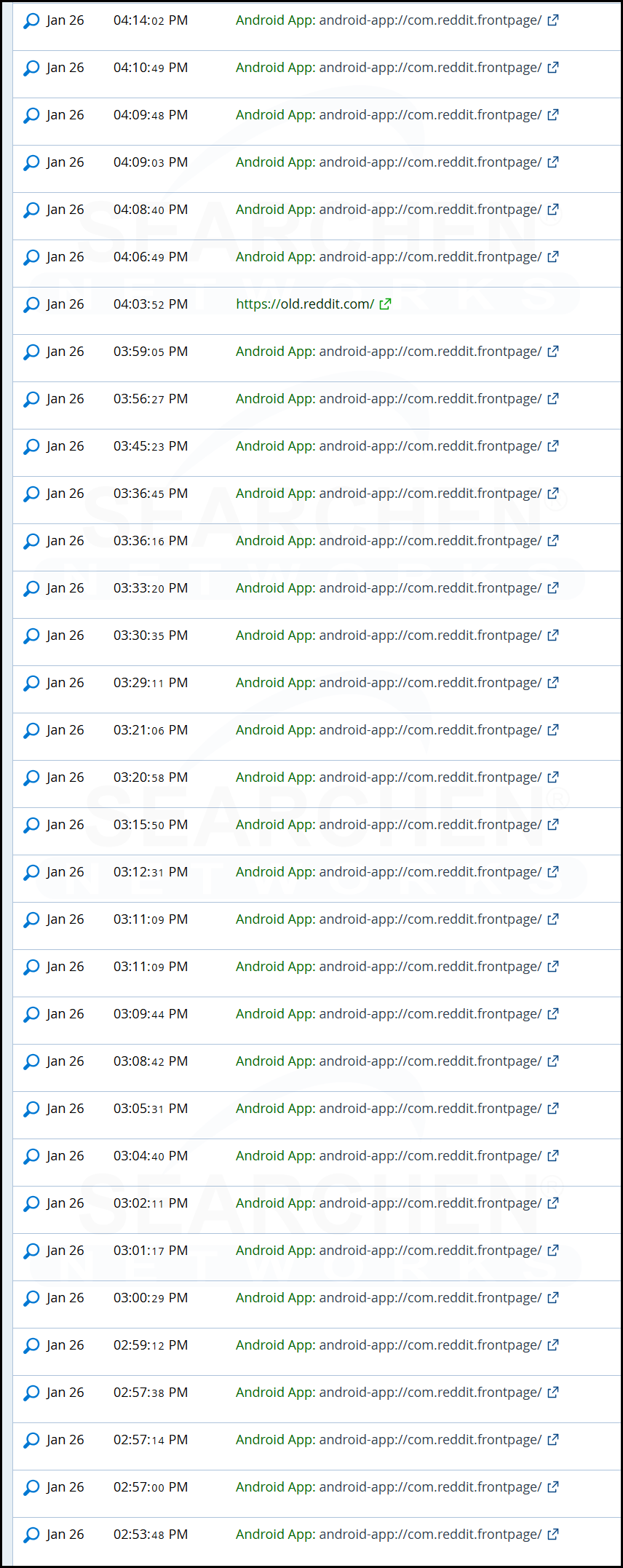
Across the internet, large public discussions about local news are increasingly happening in places where paywalled links are either discouraged, removed, or ignored altogether. Platforms like Reddit, community forums, group chats, and neighborhood social feeds have become the modern equivalent of a front page. And in those spaces, accessibility often determines which sources get shared, and which disappear from the conversation.
Unlike traditional distribution channels, many online communities prioritize links that can be opened instantly. Moderators and users alike tend to avoid sharing paywalled content, not out of hostility toward journalism, but because locked articles interrupt discussion and exclude participants.
The result is a subtle but powerful filtering effect: open-access news spreads, while paywalled reporting, even when it is original, deeply reported, and locally significant, is frequently left out of the public dialogue.
This dynamic has created an unexpected disadvantage for legacy outlets that rely heavily on subscription barriers. Stories may be reported by major newsrooms, but the links that circulate, generate debate, and attract secondary coverage often come from publishers without paywalls.
Inbound links remain a core signal for search engines, discovery systems, and recommendation algorithms. When articles are routinely excluded from discussion forums, they lose not only direct traffic but also the indirect benefits of visibility: citations, references, and organic amplification.
In effect, paywalls can sever the connection between reporting and the broader digital ecosystem that determines which stories are seen, discussed, and remembered.
This is particularly damaging for local news organizations, whose authority has traditionally been built on community presence. When residents discuss crime, housing, schools, or public safety online without linking to legacy coverage, those institutions gradually lose their role as the default source of record, even if their reporting remains strong.
Paywalls are effective at monetizing existing readers. They are far less effective at cultivating new ones.
Younger audiences, casual readers, and new residents are unlikely to subscribe before encountering a publication’s work. When their first interaction is a locked article shared in a public forum, the most common response is not conversion, it is abandonment.
Over time, this creates a narrowing readership funnel: loyal subscribers remain, but the broader public conversation moves elsewhere.
The challenge is not that journalism lacks value. It is that value now competes in spaces governed by openness and immediacy.
In an environment where discussion platforms reward accessibility, paywalls increasingly function as exclusion mechanisms rather than safeguards. They protect short-term subscription revenue while eroding long-term relevance, discoverability, and cultural presence.
Some publishers are experimenting with hybrid models; limited free articles, community-accessible versions, or event-driven open coverage, but many have not yet adapted their strategies to account for how modern audiences actually encounter news.
The most serious consequence of rigid paywalls is not declining page views – it is invisibility.
When major stories are discussed widely but sourced elsewhere, legacy outlets lose their place at the center of public understanding. Over time, they risk becoming institutions that people remember by name, but no longer interact with directly.
In the current media landscape, being unread is a greater threat than being unpaid.
And as more public discourse migrates to platforms where paywalls are unwelcome, the question facing legacy news organizations is no longer whether paywalls work, but whether they are quietly costing them the future audience they cannot afford to lose.
Platform dynamics, engagement data, and distribution mechanics all point in the same direction: accessibility determines visibility.
On Reddit, posts are ranked primarily by:
Paywalled links consistently underperform on all four metrics because:
Result: Even when allowed, paywalled links are algorithmically buried.
Industry analytics consistently show that:
On discussion-driven platforms, this creates a negative feedback loop:
This suppression happens without any moderator intervention.
Across large city, regional, and news-related subreddits, moderator guidelines often emphasize:
The rationale is practical, not ideological:
Discussion collapses when most users cannot read the source material.
As a result, moderators frequently:
Inbound links remain a foundational signal for:
Because paywalled articles are less likely to be shared or cited in forums, they:
Open-access reporting, even from smaller publishers, often accumulates more total citations across blogs, forums, and community sites.
While paywalls can monetize loyal readers, industry conversion benchmarks show:
When discovery channels are cut off, future subscribers are never reached.
Paywalls do not merely limit access, they alter how platforms rank, distribute, and surface journalism. In modern discussion-driven ecosystems, unreadable links are functionally invisible, regardless of reporting quality or institutional reputation.
Over the past 12–18 months, Google search results have shown:
This is observable across:
This is not subtle. SEOs, publishers, and journalists have all noticed it.
Google has a problem it openly acknowledges:
Reddit offers Google something rare:
In short: Reddit looks more like real human consensus than most websites now do.
From an algorithmic standpoint, that’s gold.
If Google is:
Then any publisher excluded from Reddit discussions is losing:
Paywalls don’t just block readers, They block participation in one of Google’s most trusted reflection pools of human behavior. That’s the quiet danger.
The post Legacy Newspapers Are Pricing Themselves Out of the Conversation With Paywalls first appeared on Strategic Revenue – Domain and Internet News.
Audible has just unveiled a new subscription plan for 2026. The Audible Standard membership is…
If you're interested in dipping your toes in the world of 3D printing, you can't…
Amazon has finally dropped the preorder for the Pokémon TCG: Mega Evolution—Perfect Order Booster Bundle,…
The Cybersecurity and Infrastructure Security Agency (CISA) added a critical Qualcomm chipset vulnerability to its…
Cybersecurity researcher Gjoko Krstic from Zero Science Labs has uncovered a critical flaw in Honeywell’s…
In November, Epic and Google jointly proposed a settlement that would change Android's fate globally…
This website uses cookies.