

 By rssfeeds-admin
It’s not subtle. Not even close.
As soon as I walked up to the Hy-Vee at 3000 S. Minnesota Ave., I noticed the signs.
“New lower prices on thousands of items,” they read, literally lining the grocery store’s windows, covering the columns in front of the entry and giving merely a hint of what awaited inside.
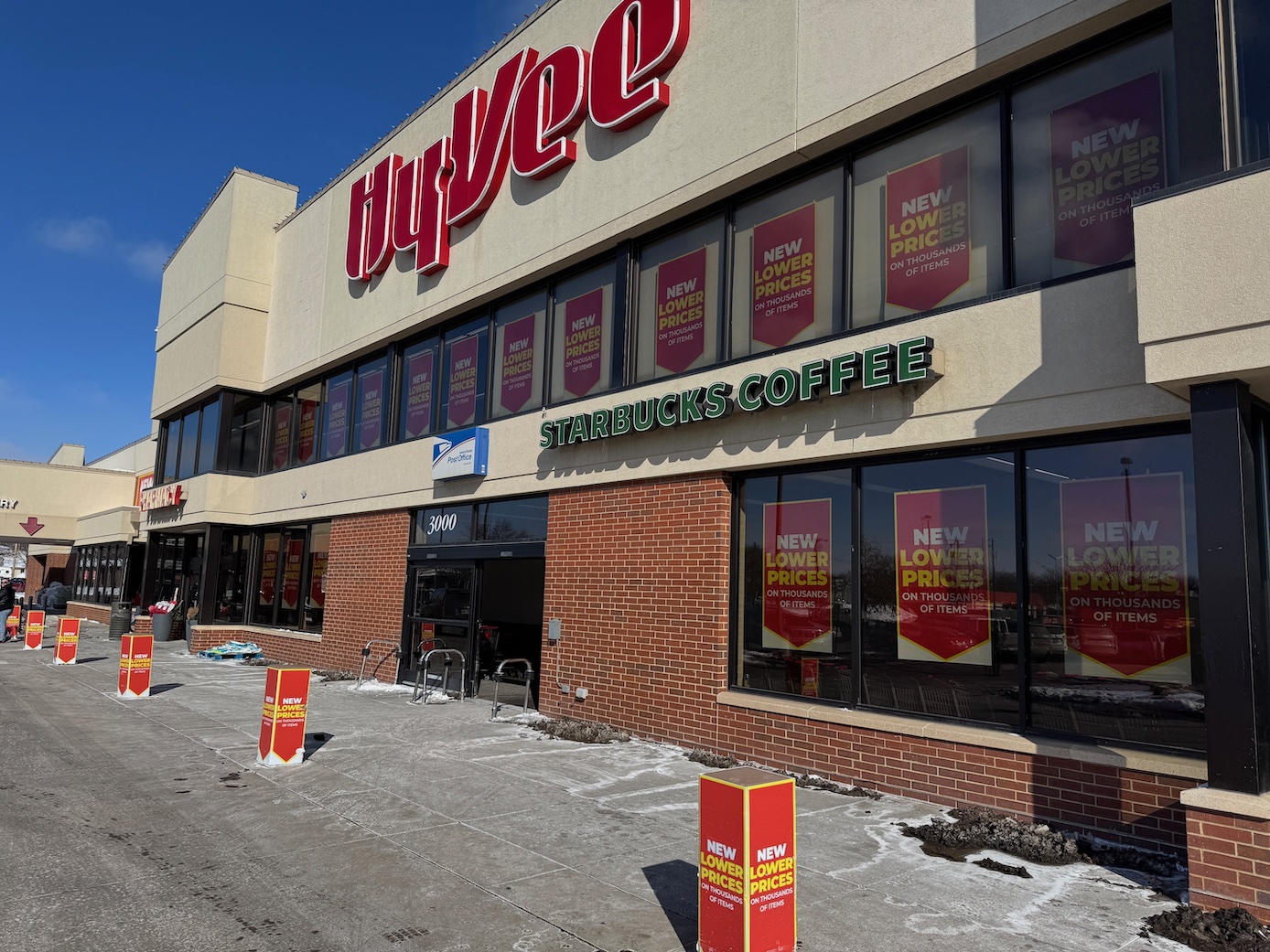
It was everywhere. Banners from the ceiling and signs posting comparative prices on what seemed like every aisle.
The message was impossible to miss: “We’re know you’re trying to save money, and we’re here to compete for your business.”

The recent shift from Wahlburgers back to the Market Grille restaurant inside the store also includes a menu that trends toward lower prices.
And who can blame Hy-Vee, or any retailer, for leaning into discounting? If you’re a business catering to the masses and you haven’t yet realized how price-conscious the consumer has become, you’re the one who’s likely going to pay.
But as we saw last week, even the flight to value is a choppy ride.
Walmart reported earnings while issuing guidance for fiscal 2026, which began Feb. 1, that put the market on notice.
At the same time, Amazon surpassed Walmart for the market’s top quarterly revenue for the first time.
It’s not like the picture was entirely gloomy. Same-store sales for the Walmart U.S. segment increased 4.6 percent in the quarter, reflecting how the retailer is attracting more higher-income shoppers — among the ones I’m guessing Hy-Vee is messaging to above.
“We have momentum driven by our low prices, a growing assortment and an e-commerce business driven by faster delivery times,” Walmart CEO Doug McMillon said in a statement. “We’re gaining market share, our top line is healthy, and we’re in great shape with inventory.”
But then came the outlook.
For fiscal 2026, the company projects a net sales increase between 3 percent and 4 percent.
“We’ve been operating in a highly dynamic backdrop for several years, and we expect this year to be no different,” Walmart CFO John David Rainey said on the earnings call. “Our outlook assumes a relatively stable macroeconomic environment but acknowledges that there are still uncertainties related to consumer behavior and global economic and geopolitical conditions.”
Now, I didn’t exactly read that as the bottom dropping out, but investors and analysts reacted strongly.
MarketWatch quoted Jose Torres, a senior economist at Interactive Brokers, who said the warning “raised another red flag just as mounting trade tensions threaten to drive up the costs for goods.”
The guidance comes as households are “feeling the pressure of elevated prices, heavy borrowing charges and reduced credit availability, and this earnings report points to the potential for a slowdown sometime this year,” he wrote.
Additionally, “if Walmart is giving bad guidance, you should be paying attention to it,” Tom Fitzpatrick, managing director at R.J. O’Brien & Associates, told CNBC.
“Perhaps this is suggesting that the general consumer is tapped out.”
The same day, Forever 21 announced its going-out-of-business sale at The Empire Mall, one of hundreds of closures nationwide ahead of an expected bankruptcy filing.

This is a retailer that capitalizes on fast fashion, priced affordably as trendy wardrobe additions for young women. Its biggest threats have been e-commerce as well, as Shein and Temu undercut even its low prices and lured customers with well-honed algorithms and irresistibly cheap merchandise.
“Forever 21′s struggles indicate how much the category has evolved over the last few years and how difficult it is for others, especially those with large store footprints, to survive in the new landscape,” according to this CNBC analysis.
It’s already hard for brick-and-mortar retailers to compete from a pricing standpoint given online retail’s generally smaller overhead. Add in a more price-conscious consumer who scores the convenience factor of home-delivered purchases and it gets even tougher.
A monthly survey by the University of Michigan released last week found that consumer sentiment dropped for the first time in six months.
“While personal finance assessments have remained stable, worries about job security have increased,” it said.
“According to the survey, 47 percent of respondents expect unemployment to rise in the coming year, the highest percentage since the pandemic recession. Concerns over wages and job stability could further dampen consumer confidence in the months ahead. Expectations for income growth have also weakened, reinforcing concerns that economic uncertainty could impact household financial planning.”
In other words, a consumer that already has been more reluctant to spend is about to become even more so.
If your business depends on consumer spending, now is the time to follow Hy-Vee’s lead: Figure out how to deliver more value, prepare to shout it from the rooftops, and don’t count on a smooth landing even then.
The post Jodi’s Journal: The flight to value is a choppy one appeared first on SiouxFalls.Business.
Discover more from RSS Feeds Cloud
Subscribe to get the latest posts sent to your email.